
FODMAPs at your serving
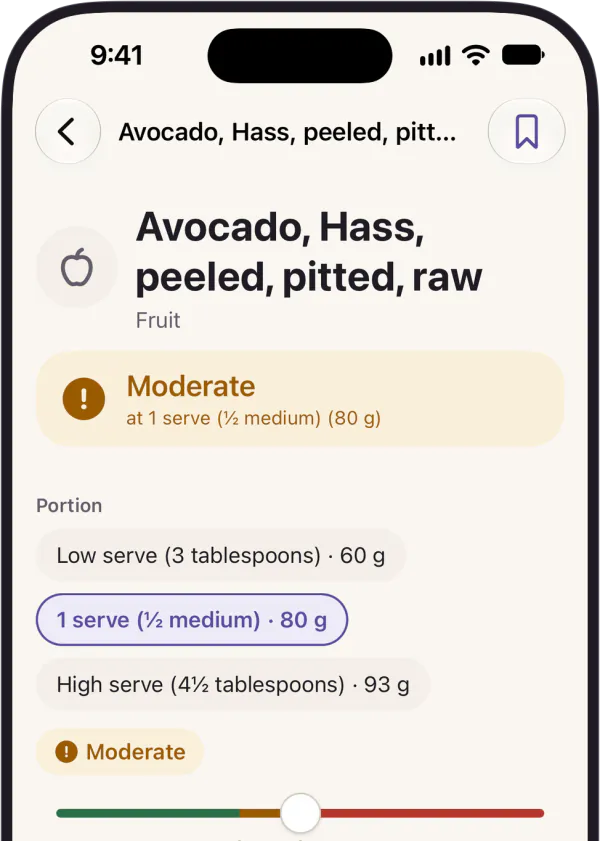
Search a food to see whether your serving is low, moderate or high in FODMAPs, and where that changes as the portion grows.
Digeo guides you through the low-FODMAP diet for IBS, phase by phase. Learn which foods bother you and which you can enjoy again.
 Coming soon
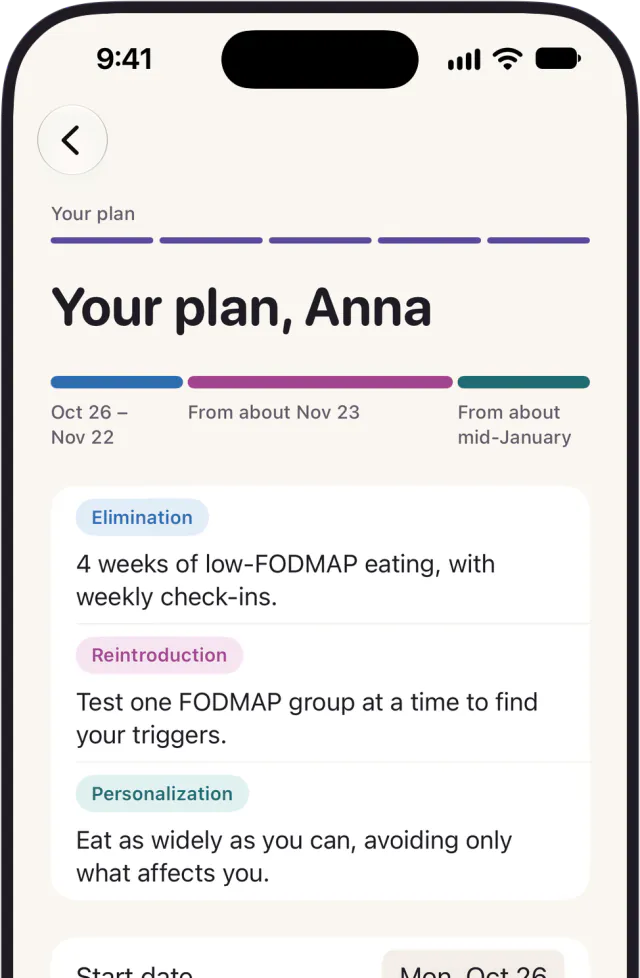
FODMAPs are carbs in some foods that can trigger gut symptoms like bloating, pain and gas. Digeo gives each phase a date and guides you through it.
Eat low-FODMAP for 2 to 6 weeks, with a weekly check-in that compares your symptoms with where you started.
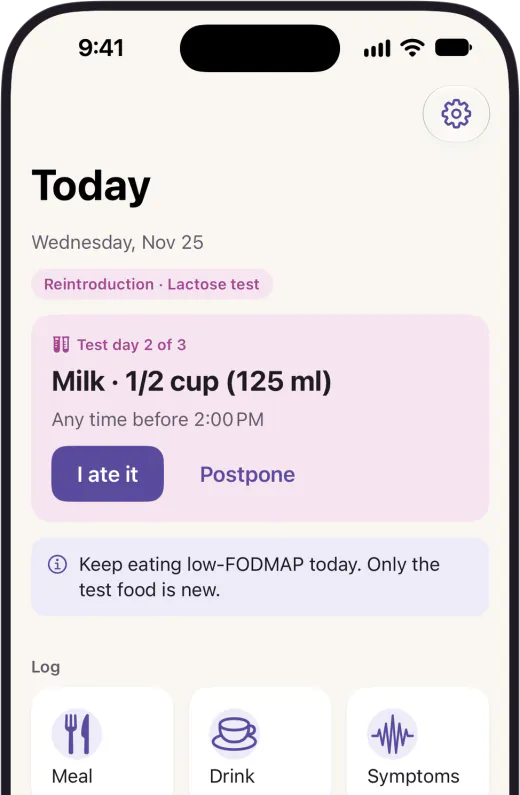
Test one FODMAP group at a time, 3 days per test, with a little more of the test food each day. Digeo suggests a result, and you confirm or change it.
Eat as widely as you can, avoiding only the foods your tests showed affect you.
Search a food to see whether your serving is low, moderate or high in FODMAPs, and where that changes as the portion grows.
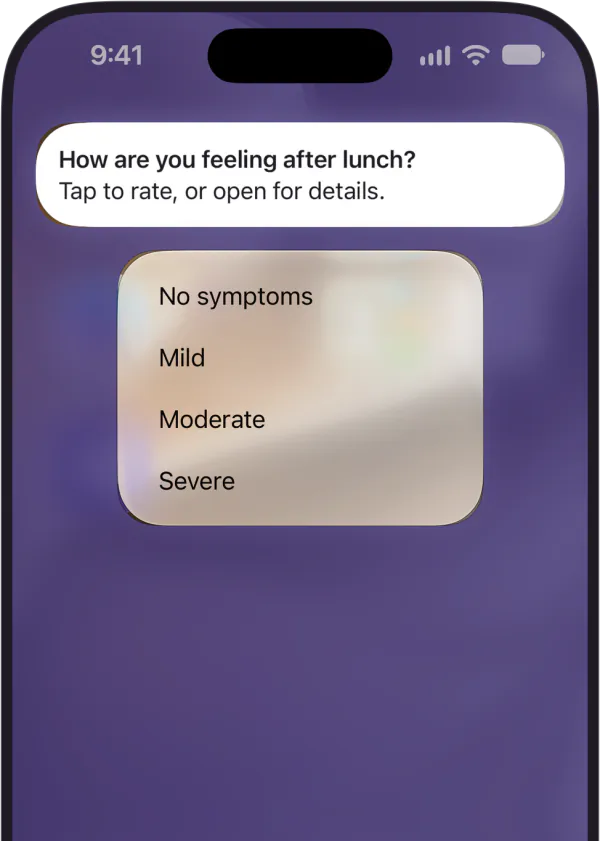
A few hours after each meal you log, Digeo asks how you feel, and you answer without opening the app.
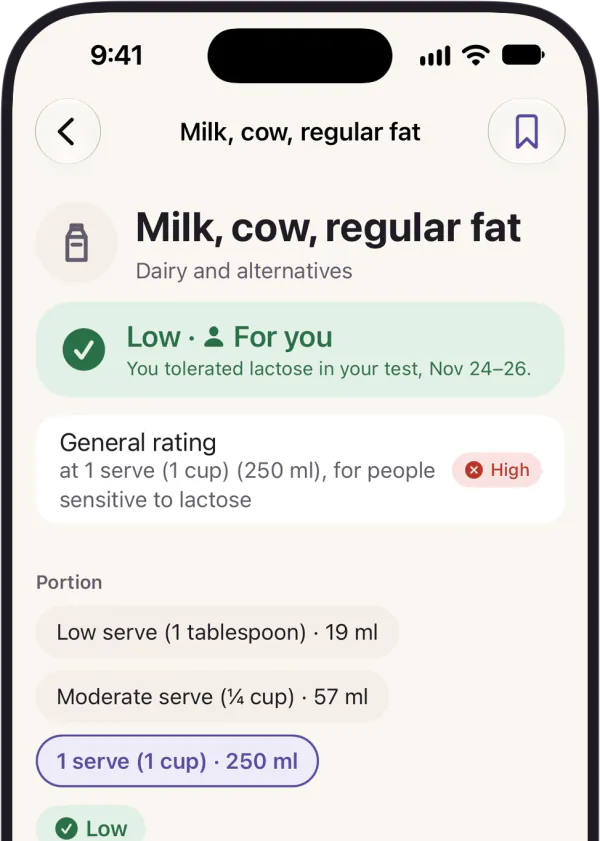
After you test a FODMAP group, Digeo rates foods by your own result for that group.
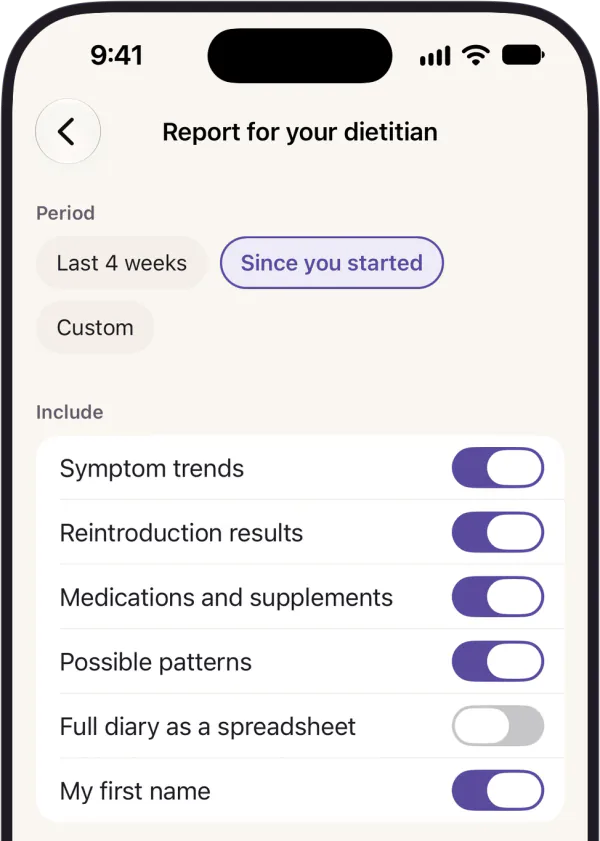
Symptom trends, test results and possible patterns in one PDF to take to your appointment.
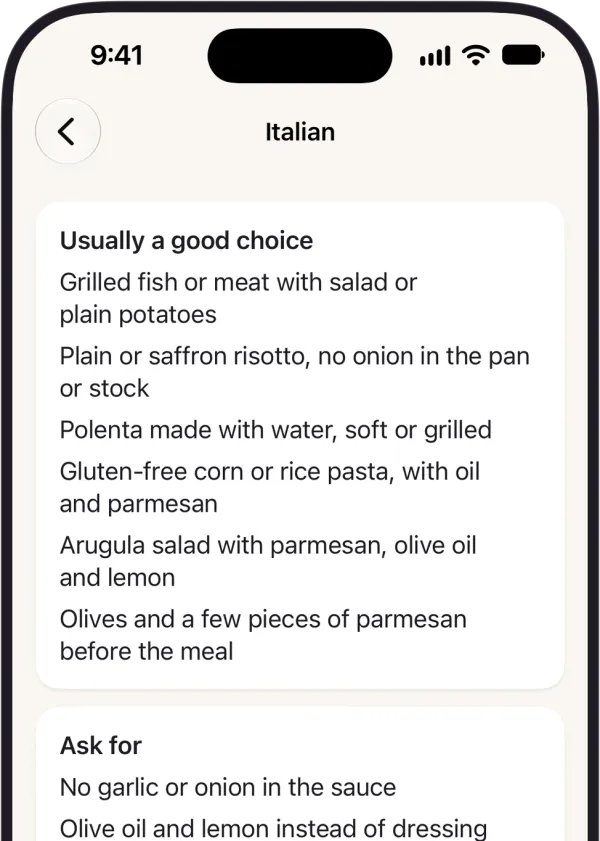
Guides for restaurants and cafés list dishes that are usually a good choice, and what to ask for.
Your diary is stored on your iPhone. Digeo shows no ads and runs no analytics, and a report leaves your phone only when you share it.
Read the privacy policyFor help with a subscription, notifications or your data, see the support page.
The low-FODMAP diet is an eating plan your doctor or dietitian may suggest for IBS. FODMAPs (fermentable oligosaccharides, disaccharides, monosaccharides and polyols) are carbs in some foods that can trigger gut symptoms like bloating, pain and gas. The diet cuts back on FODMAPs, then brings the FODMAP groups back one at a time to learn which ones affect you, in three phases: elimination, reintroduction and personalization.
The six FODMAP groups are fructans (in wheat, onion and garlic), GOS (galacto-oligosaccharides, in beans, lentils and some nuts), lactose (in milk), fructose (in honey and many fruits), and the sugar alcohols sorbitol (in stone fruit and avocado) and mannitol (in mushrooms and cauliflower). Digeo shows all six for every food.
Digeo is an iPhone app that guides people with IBS through the low-FODMAP diet, with a plan that has real dates for each phase. In elimination, which lasts 2 to 6 weeks, it shows which foods and portions fit and compares your symptoms each week with where you started. In reintroduction, it guides your food tests, and in personalization, its ratings use your own results.
Yes. Digeo helps you follow the low-FODMAP diet, but it doesn't diagnose or treat IBS and doesn't replace medical care. Use it alongside your doctor or dietitian, and bring a Digeo report to your appointments.
Digeo rates 1,089 foods and drinks as Low, Moderate or High for the serving you'd eat, with an icon, a word and a color. It rates each of the six FODMAP groups separately and shows where the rating changes as your portion grows.
Digeo's ratings come from its own food data, with each food rated per serving. Where a FODMAP group has no data for a food, Digeo shows “Not tested”, never “low”.
Digeo guides you through 7 reintroduction tests, one at a time, that together cover all six FODMAP groups. Each test takes 3 days, with a little more of the test food each day, and Digeo suggests a result (Tolerated, Tolerated in small amounts or Trigger) that you confirm or change. After a test, search ratings and meal warnings use your own result for that group.
Yes. Digeo has 12 eating-out guides for restaurants and cafés, with dishes that are usually a good choice, what to ask for and what to watch out for. It also has 24 low-FODMAP recipes with a shopping list, and 30 common dishes, such as pizza, pad thai and pierogi, with the ingredients to watch.
Yes. A few hours after each meal you log, Digeo sends a check-in you answer right from the notification, without opening the app: No symptoms, Mild, Moderate or Severe. An evening check-in asks how your day went, and if you turn on Discreet notifications, check-ins say “Time for a check-in” instead of naming symptoms.
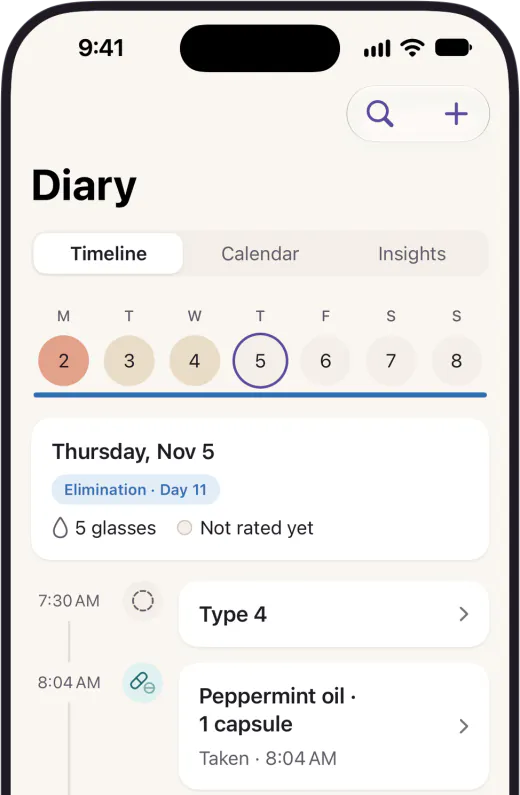
Digeo keeps one diary for meals, drinks, symptoms, stool type, medications, water and notes. You log a meal in a few taps from recent foods or usual meals, and Digeo shows its combined FODMAP load and warns you when a portion doesn't fit your current phase. Every Sunday, Digeo sums up your week: how your days went, the biggest change and what's coming up in your plan.
Digeo helps you find trigger foods the way the diet does: by testing one FODMAP group at a time in reintroduction. After about 14 days of logging, it also shows possible patterns between your symptoms and foods or factors like stress, poor sleep and caffeine, as clues to test rather than diagnoses.
Yes. Digeo creates a PDF report on your iPhone with your symptom trends, reintroduction results, medications and possible patterns, plus an optional spreadsheet of your full diary. The report leaves your phone only when you share it.
No. There's no sign-up, email or password. Your diary is stored on your iPhone and included in your iPhone's iCloud backup when that's turned on, and Digeo has no server, so your diary never reaches its developer.
Yes. Digeo's food data is stored on your iPhone, so search, the diary, check-ins and reports all work without an internet connection. You need a connection only to subscribe or restore a purchase.
Digeo is an iPhone app and works on any iPhone with iOS 26 or later. There's no Android version, and Digeo is available in English only.
Digeo's guided program costs $59.99 a year, starting with a 1-week free trial for new subscribers, or $14.99 a month. Food search works without a subscription. Prices are in US dollars and may vary by country.